
What is Sheet Metal Fabrication?
Sheet Metal fabrication is a manufacturing process that converts sheets of metal into custom functional parts. The process typically involves removing material from the sheet to form the basic shape and then may involve secondary steps, such as bending, to create more complex 3D shapes such as pans, boxes and brackets. The sheet metal fabrication process typically involves CNC (Computer Numerical Control) machines that guide the cutting or forming process automatically under computer control. The manufacturing process makes precision parts with simple or complex shapes by automating the cutting process.
In CNC machining, a computer program written in the G-code language, is used to control all aspects of the machine. The G-code tells the machine what to do at each step, including motions, speeds and feed rates. The G-code is typically created using computer-aid-manufacturing (CAM) software which works from CAD software. The G-code is uploaded to the machine for processing.
How does sheet metal fabrication work?
Raw material in sheet form is first mounted in a machine on a “workholding device” typically using clamps or gravity to hold the material that is being machined. The CNC machine reads the G-code program to move cutting tools in a predetermined sequence. The cutting sheet metal tools move along the X, Y and sometimes Z axes. In more advanced machines there are even more axes of movement. This allows the CNC machine to produce parts with complex geometries and high levels of precision.
During the machining process, the machine tools remove material from the workpiece by a cutting action. As the material is removed, the cutter moves to the correct position for each machining operation, as specified by the G-code. This process is repeated until the desired part has been fully fabricated.
Types of sheet metal fabrication
There are several different methods of sheet metal fabrication, each of which has its own advantages, such as speed, accuracy, and cost-effectiveness, making them useful for a variety of applications and sheet metal materials.
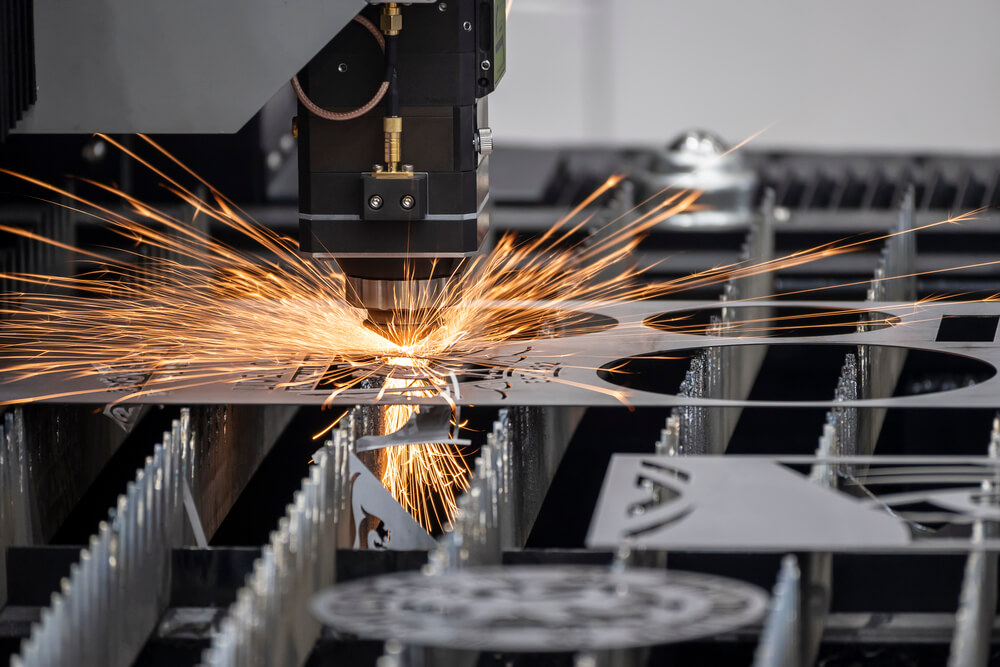
Laser cutting is a type of fabrication that uses a focused laser beam to cut and shape materials.
Waterjet cutting is a type of fabrication that uses a high-pressure stream of water to cut and shape materials.
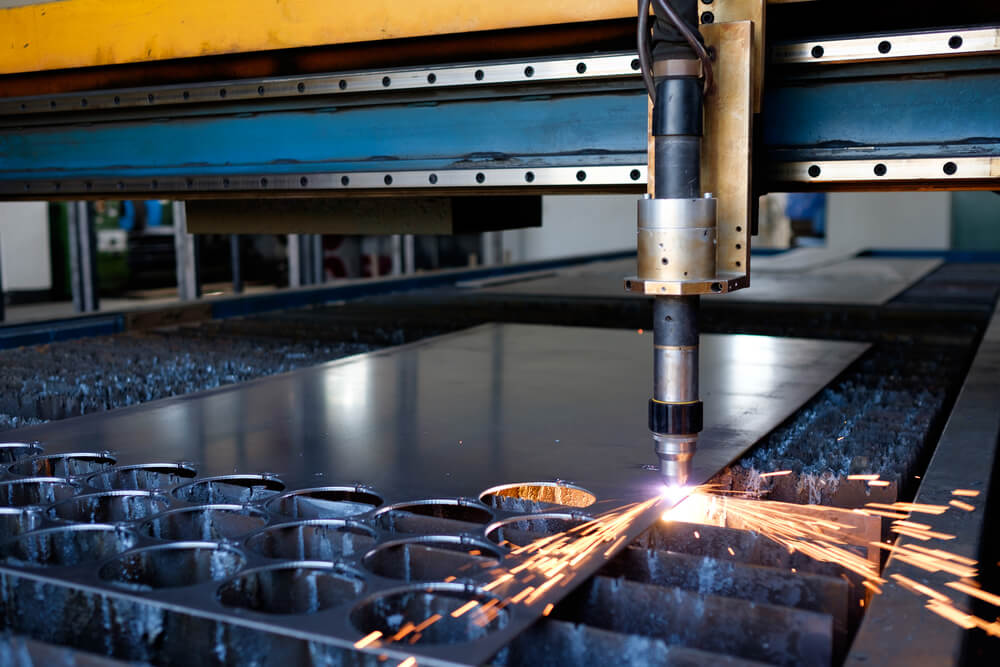
Plasma cutting uses gas and electricity to cut through the sheet metal.
Designing for sheet metal
Here are some design tips for parts that will be fabricated from sheet metal:
Complex shapes and features may be difficult or time consuming to machine, so it is generally best to keep the design as simple as possible.
Tolerances are the allowable variations in the size and shape of a part. It is important to use appropriate tolerances for sheet metal fabrication, as overly tight tolerances may be difficult to achieve and may result in increased production costs. Tolerances for flat parts will be tighter than parts with bends. Parts with multiple bends create a tolerance stack that should be carefully considered.